Notice anything different about the modern workplace? Cubicles and closed offices no longer dominate. Now, open-office plans and collaborative spaces have become the norm for many companies.
Open-office spaces are large, open areas with few or no walls or physical barriers, featuring scattered workstations and shared spaces like break rooms and meeting areas. (Some open offices use hot-desking, a method where workstations are unassigned and available on a first-come, first-served basis. We will be focusing on open-office spaces that offer dedicated desks alongside shared spaces for flexibility and collaboration.)
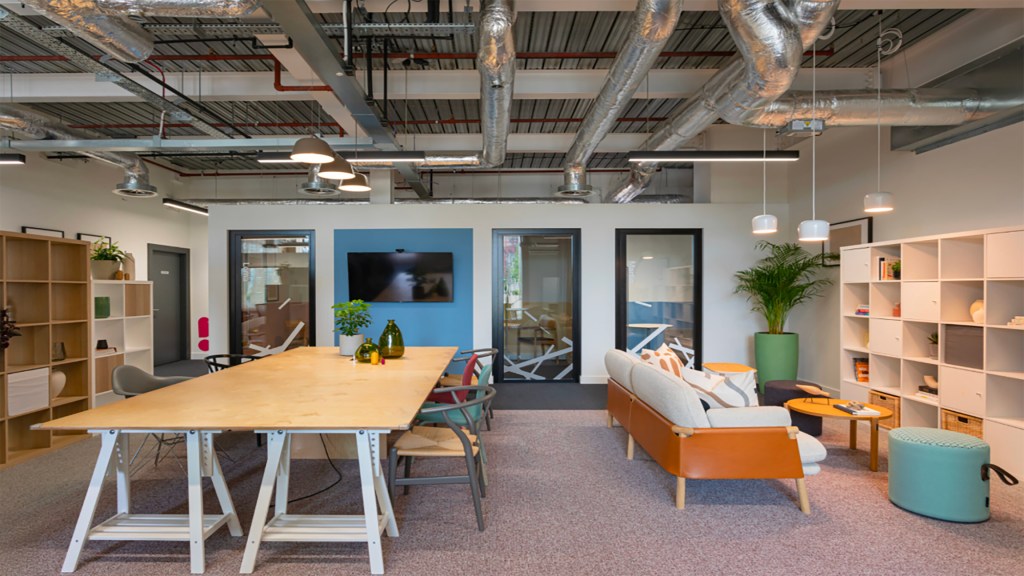
While this shift has been somewhat polarizing, the benefits of open-office spacing and collaborative environments continue to prove their worth in promoting productivity, creativity, and a stronger sense of community and collaboration within companies.
With the rise in use of laptops, people can now easily move around their offices, choosing different seating and room options to fit their current wants and needs. As a result of this flexibility, open-office environments are able to naturally fosters collaboration, encouraging conversation between all employees, regardless of their department role. When employees are no longer confined to cubicles or separate offices, the barriers to communication change.
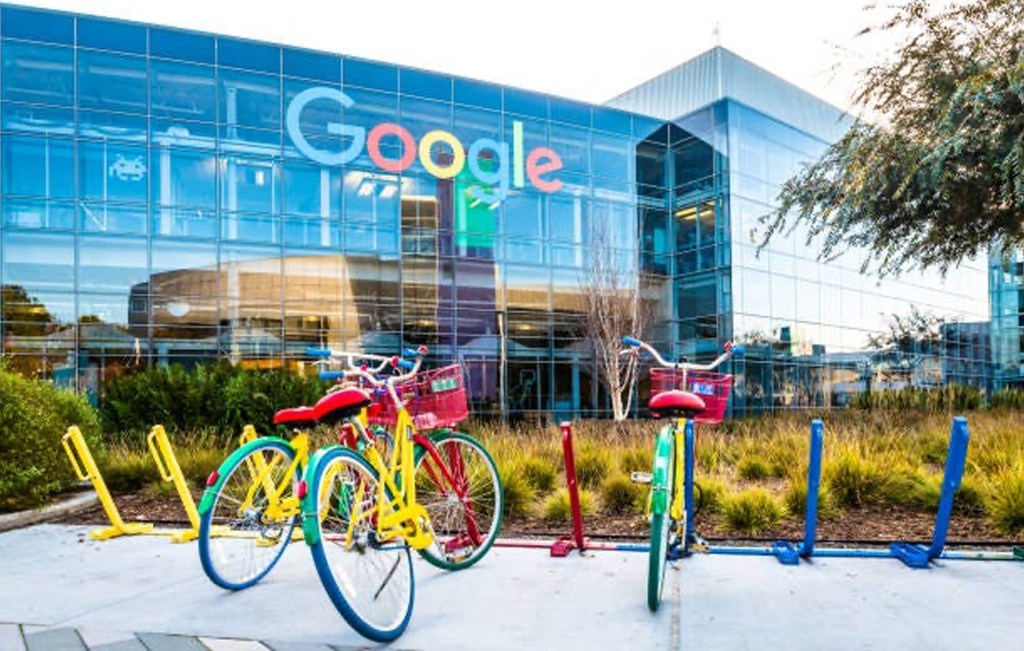
One of the most well-known champions of open-office and collaborative design is Google. The company’s campuses, specifically their main HQ, Googleplex, are designed to embody principles of openness, flexibility, and creativity.
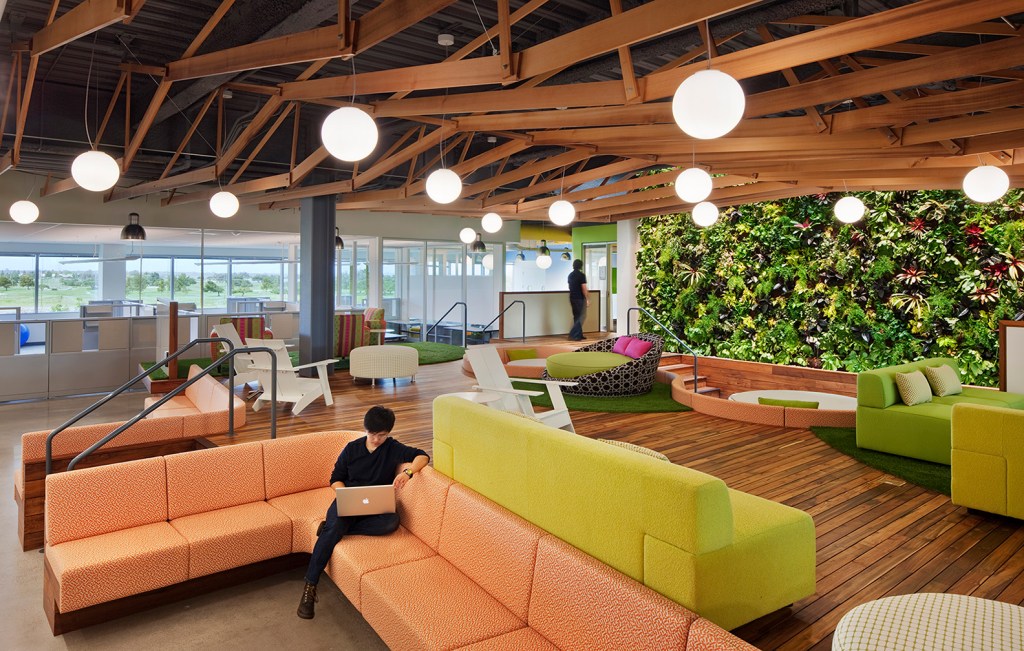
Employees can choose where and how they want to work, whether that’s at a standing desk, in a quiet nook, or at a communal table surrounded by peers from other departments. This flexibility mirrors the philosophy that creativity is best supported when people can adapt their environment to their task.
When designing the first campus built by Google, we focused on creating a space that supports everything from events, socialization, and learning. The goal was to find flexible, spatial solutions that can adapt as our needs change.
Director of Real Estate Research and Development at Google, Michelle Kaufmann.
In order to be flexible, many open-office layouts include areas with movable furniture and writeable surfaces that can adapt to different group sizes and needs. Rather than being tied down to fixed layouts, Google employees can choose the kind of space that best supports their task at hand, which fosters efficiency and comfort.
Google also invests heavily in amenities including open kitchens, unique lounge spaces, and outdoor work zones that encourage employees to interact casually. By surrounding people with inspiring spaces and coworkers, Google has built offices that feel less like workplaces and more like a community with their own values and ethos.
This layout is successful for Google because creativity thrives on interaction. Collaborative spaces encourage discussing ideas across departments that may not otherwise intersect. According to Scott Doorley and Scott Witthoft, authors of Making Space: How to Set the Stage for Creative Collaboration, people get inspired by whats around them, so you should surround them with inspiration. That includes the inspiration that you gain from others insights and lived experiences.
Open-office layouts also create a sense of transparency; without walls and dividers, employees can see what others are working on, and this visibility can encourage feedback and conversation. Company leaders are then able to work alongside their teams in the same space, shifting their relationship to employees from one of power and hierarchy to one of approachability.
These unexpected collisions of thought are often what lead to a breakthrough. By altering the barriers of typical workplaces, open-office environments help organizations work as a collective unit, one that works better as the sum of its parts.
Thinking about redefining the workplace as extending beyond the four walls of the office building will ensure you’re prepared for whatever the future may hold.
Director of Real Estate Research and Development at Google, Michelle Kaufmann.
Creativity thrives on interaction. Collaborative spaces encourage discussing ideas across departments that may not otherwise intersect. According to Doorley and Witthoft, people get inspired by whats around them, so you should surround them with inspiration. That includes the inspiration that you gain from others insights and lived experiences.
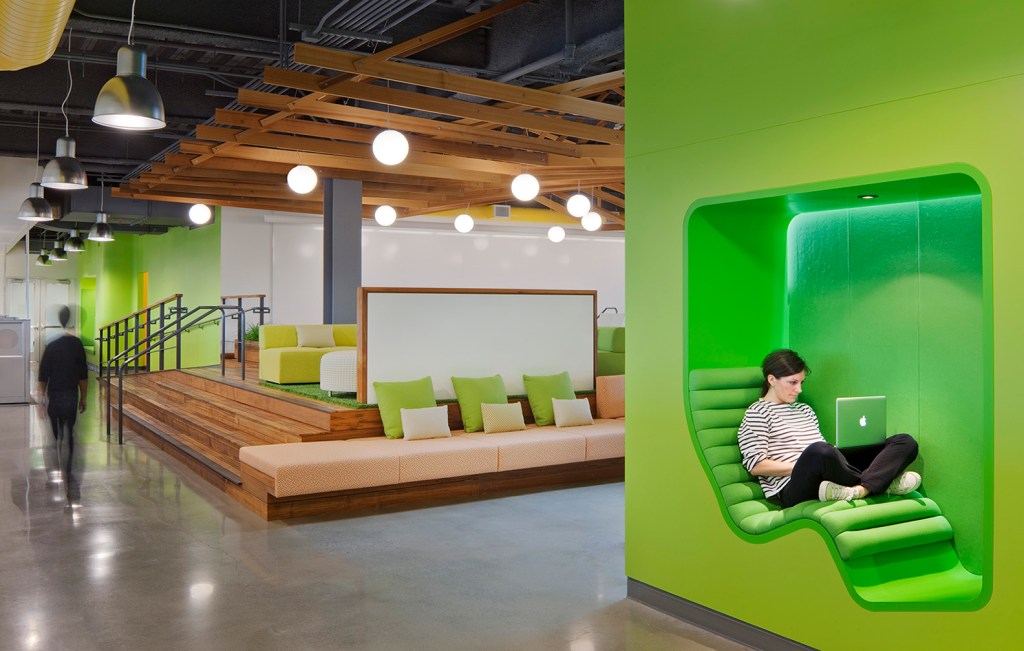
Open-office designs can also often make better use of space. Rather than dedicating large amounts of space to private offices, companies create large shared areas that serve multiple functions. This allows for a more versatile use of space, while also allowing companies to spend money on other important features that improve the workplace energy, such as an open kitchen, which allows people to feel ‘at home.’
That being said, open-office environments are not without challenges. Noise levels, lack of privacy, and other distractions can hinder productivity. Employees may complain about a lack of personal space. However, these issues can often be addressed by thoughtful design choices, such as providing quiet zones, soundproof booths, or flexible spaces for focused work.
Important reminder: Doorley and Witthoft encourage that even in open-office settings, personal spaces also need to be in place to support creative work. If you provide no break or escape from being social, people will find other ways to disengage.
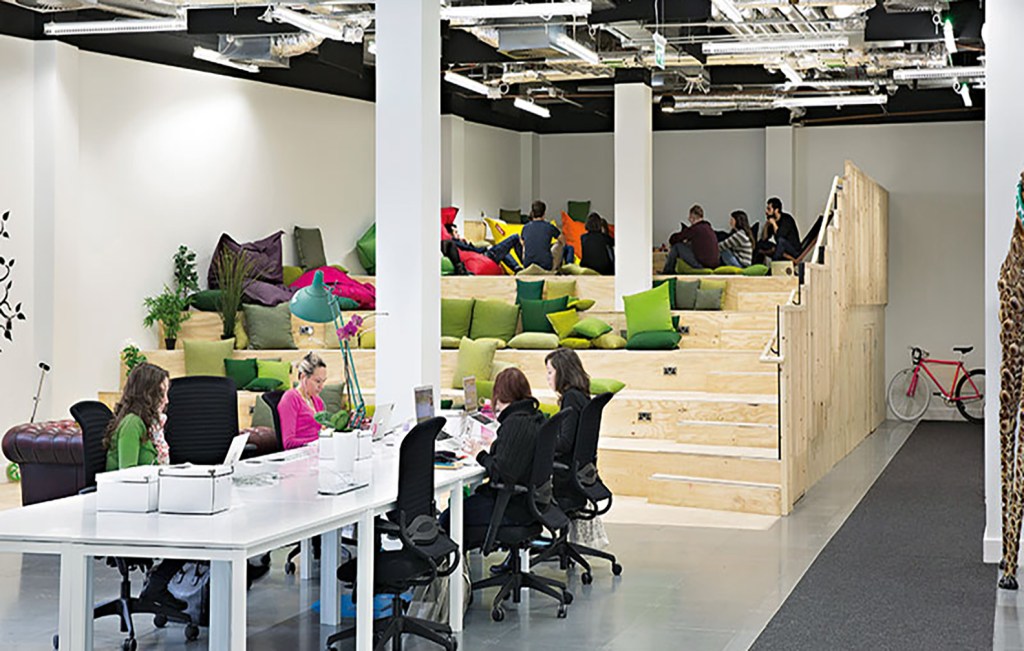
Airbnb’s office in Dublin for example utilizes comfortable seating with pillows in common spaces to encourage people to feel at home in their unique space.
Companies must find balance; offering openness for collaboration while ensuring employees also have access to private/quiet spaces when they need them.
Open-office and collaborative spaces are more than just a temporary trend. They reflect a shift in how we understand the workplace and work itself. By altering existing barriers, encouraging communication, and fostering a culture of openness, these environments help companies embrace flexibility, creativity, and connection. When done intentionally, they can transform the office into a place where people don’t just complete necessary tasks, but feel a purpose.
In our society, innovation and adaptability are critical, and the benefits of open-office layouts and the collaborative environments they bring should not be overlooked.
 Cami Rick