
The experience of shopping can reveal just as much about design as the products themselves. The brightness and clear layout of a typical retail store tells you you’re welcome to browse freely while the marble and velvet displays of designer stores feels like a different and precious world. A $20 T-shirt and a $2,000 handbag don’t just differ in price, they come with an entirely different shopping experiences.
In the book Emotional Design, author Don Norman distinguishes between products and brands that appeal primarily to our behavioral needs, including usability, comfort, and function, and those that operate on a more reflective level, where emotion, meaning, and identity take primary focus.
By utilizing a comparison between fashion brands Gap vs. Diesel, Norman is able to capture an ever-present contrast between the functional mainstream design and reflective, identity-driven design. He explains how Gap, a store with a simplified, and primarily self-service store layout, works to put customers at ease, whereas Diesel’s approach is to disorient the customer in their space to encourage interact with employees.
We will explore this idea further through the brands ‘Gucci’ and ‘Old Navy,’ looking at the typical Old Navy storefront in comparison to the Palazzo Gucci storefront and bookstore in Florence, Italy.
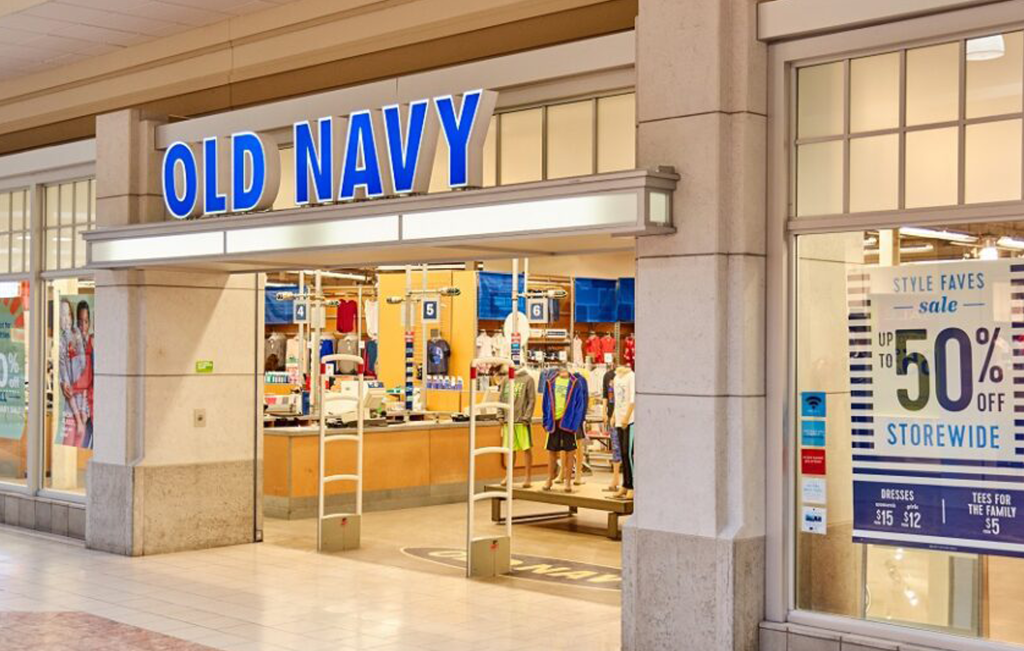
Old Navy embodies behavioral and visceral design at its most accessible. Its stores are bright, open, and practical and its clothing is designed for comfort and versatility rather than self-expression. Customers are encouraged to help themselves as the store layout and sizing options are easy enough to navigate without confusion or assistance.
The retailer opted for an airier, easier-to-navigate layout where the product takes center stage.
Writer for Forbes, Barbara Thau.
The focus is on reliability and affordability; garments that fit easily into everyday life. The aesthetic is cheerful and familiar to typical clothing shopping, appealing to a wide audience through usability and inclusion.
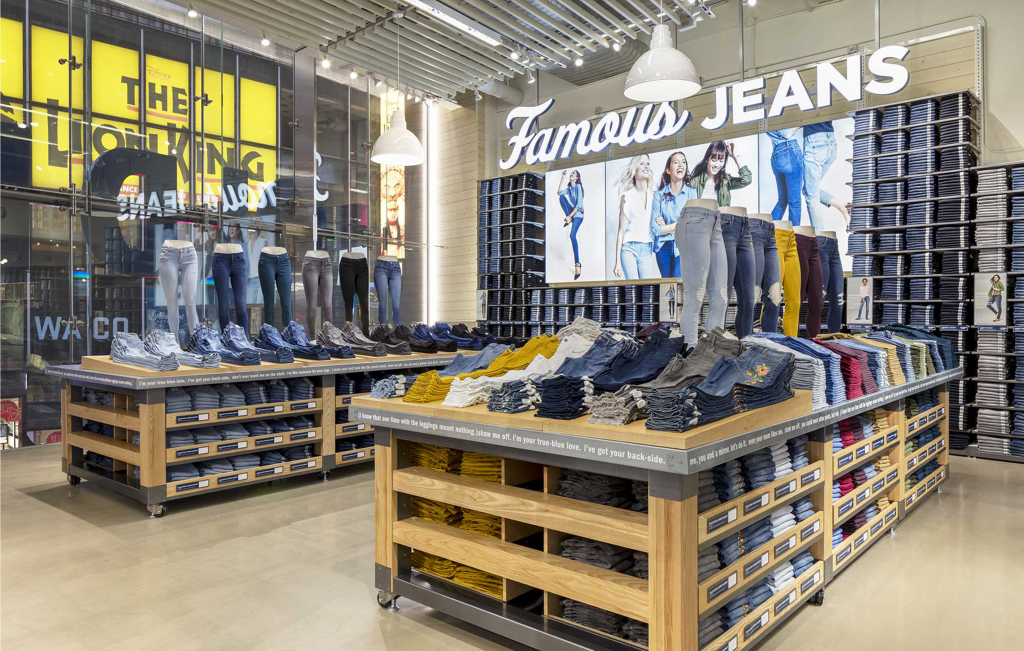
To the practitioner of human-centered design, serving customers means relieving them of frustration, of confusion, of a sense of helplessness. Make them feel in control and empowered.
Author of Emotional Design, Don Norman.
In addition, their products are not an overt statement about your self-identity, but instead serve as reliable wardrobe staples that can be paired with anything because of their simplicity and versatility.
Like Norman’s example of Gap, Old Navy succeeds because it removes friction or confusion. Shopping there is straightforward, prices are clear, and the brand’s personality is friendly and unpretentious. It communicates stability and ease rather than aspiration and ambiguity.
We believe in the democracy of style, which means making fun, high-quality, and essential fashion accessible to everyone for the whole family.
Global Retail Owners of Old Navy, Gap INC.
Palazzo Gucci, on the other hand, operates in a different manner, and serves different needs than the reliable Old Navy. Located in Florence, the store merges retail and experience, functioning as both a boutique and exploratory space. Its designs are full of deeper meaning, with ornate architecture, historical references, and curated installations that evoke the brand’s history and heritage. It is not a simple store layout, but a confusing exploratory experience.
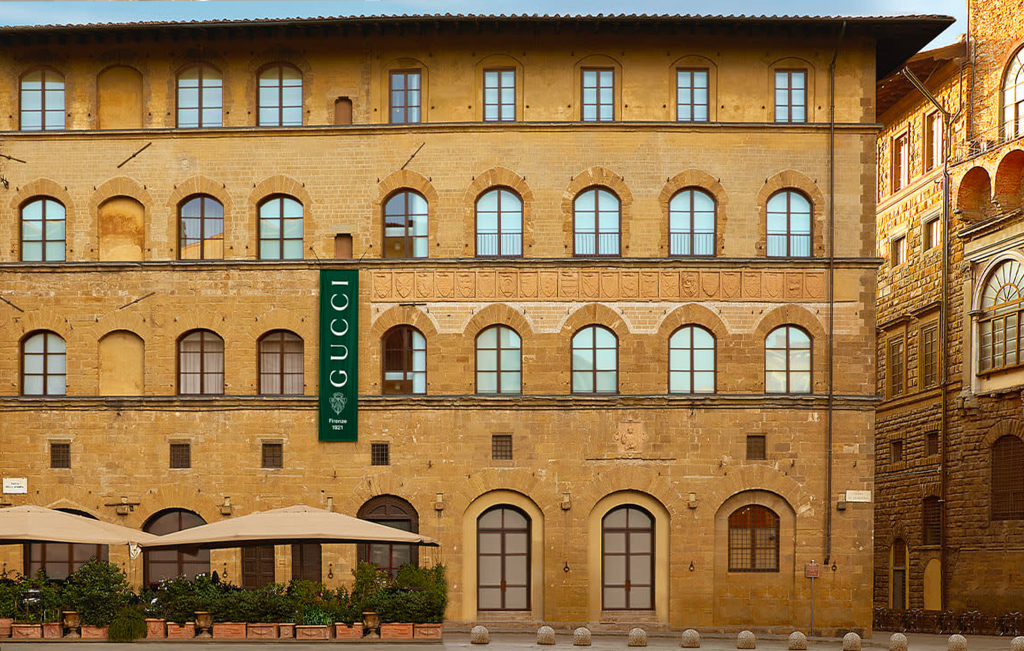
[Using] confusion is a pure play on emotions, selling you, the customer, the idea that the proposed item will precisely serve your needs and, more important, advertise to the rest of the world what a superior, tasteful, ‘with-it’ person you are.
Author of Emotional Design, Don Norman.
When shopping at Palazzo Gucci, you become a participant in a narrative of art, luxury, and legacy. Visitors don’t simply purchase an object (in fact, they are more likely to not purchase anything due to the price point), they step into a brand ethos that emphasizes exploration and theatricality.
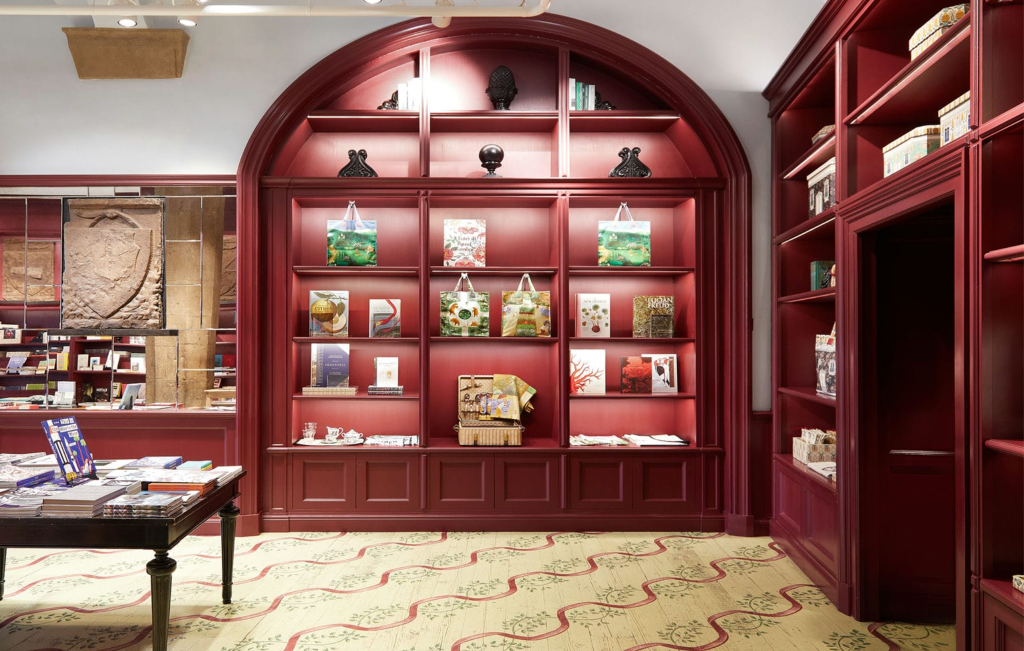
[Gucci] takes a journey across time to chart the House’s history spanning over 100 years, from a shop opened in 1921 on Via della Vigna Nuova in Florence to its position today as a world-renowned symbol of Italian craft, visionary creativity, and innovative design.
Gucci.
Where Old Navy’s design invites comfort and familiarity, Palazzo Gucci’s invites contemplation and self-identification. Its value lies not in it’s function as a retail store but in its meaning and what it communicates about a persons self identity, including their taste, culture, and belonging. In Norman’s framework, Gucci’s Palazzo is an interesting study in reflective design as it transforms the consumer experience of shopping for clothing or accessories into a deeper form of self-expression and identity.
The stores simply serve different needs. For fashion, emotion is deemed key. Stores that manipulate or play into emotion are doing what is expected of them in the high-fashion world.
Wouldn’t you feel weird seeing a pile of Gucci sweaters, something that costs more than our grad school educations, laid out on cheap mass-produced tables?
 Cami Rick