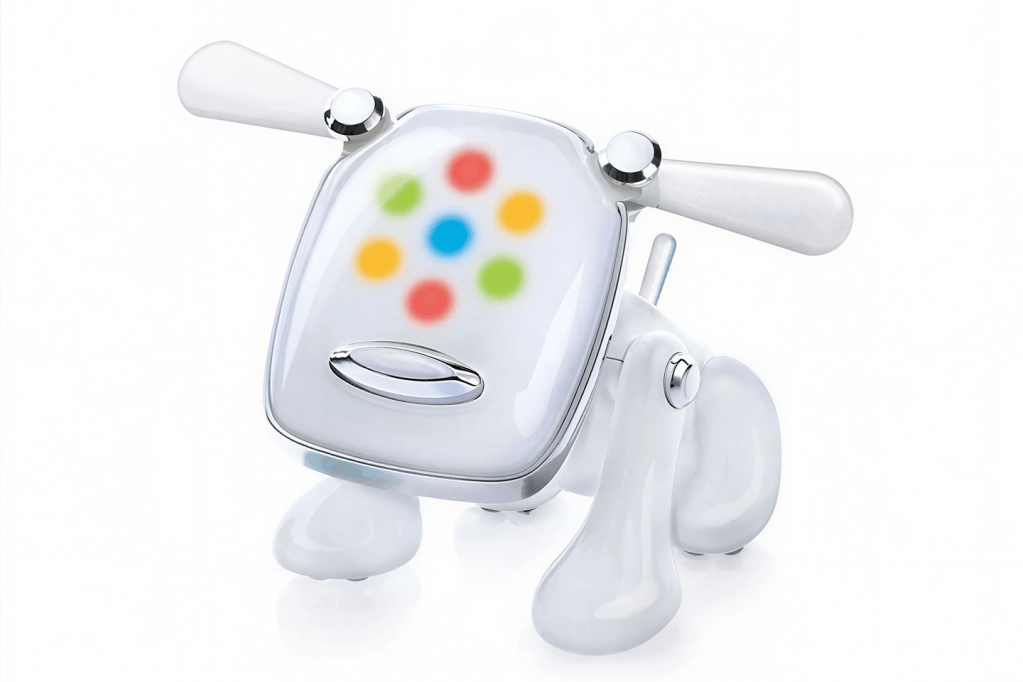
My first pet growing up circa 2005 was an iDog, shared between me and my sister . The iDog was revolutionary for parents at the time; it was a mess-free pet that reacted to music from your iPod. He had the ability to dance to the beat of the music by wiggling his ears, moving his foot and tilting his head around. Our iDog also has a number of switches on its nose, head and tail which allow it to react to our touch. It’s various “emotions” created different color patterns on its lights, visibly showing that it preferred me over my sister.
Our iDog wasn’t lifelike, far from it, but it felt alive in the ways Don Norman describes in Emotional Design. It was expressive, reactive, and emotional enough to keep our attention and gain our love.
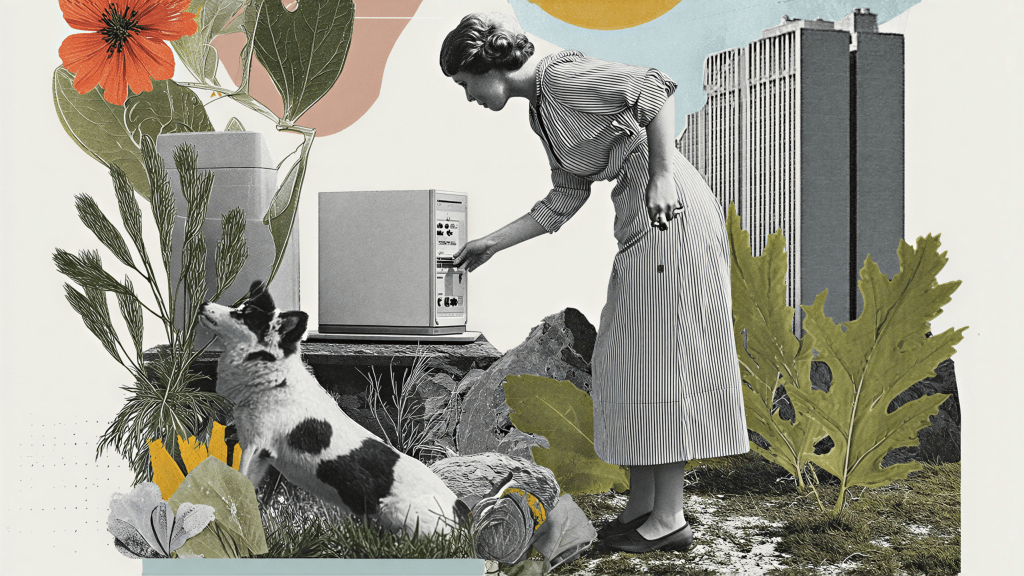
In Chapter 6, Norman argues that for robots to fit naturally into our lives, they must do more than perform tasks. These machines need to express emotion. Emotions enable us to translate intelligence into action; robots need emotion in order to make complex decisions.
When this book was written, Norman speculated that we were entering the decade of immense progress for robots. He recognized how at the time of writing, robots had their intellectual knowledge of what it means to be afraid, but it isn’t coupled to feelings or to actions.
Emotional expressions will let us know their motivations and desires, their accomplishments and frustrations, and thus will increase our satisfaction and understanding of robots.
Author of Emotional Design, Don Norman.
Robot pets have a long lineage, starting with experimental quadruped machines like the Westinghouse Sparko in the 1940s and the Phony Pony in 1966. The idea didn’t truly enter mainstream culture until the late 1990s when playful companions such as Tamagotchi and Furby captured widespread attention. This momentum paved the way for more advanced creations like Sony’s AIBO in 1999, which behaved much more like a real dog than its prior competition. In 1999, Tomorrow’s World, a BBC television show discussing science and technology, showed off Sony’s AIBO; It sold out in minutes.
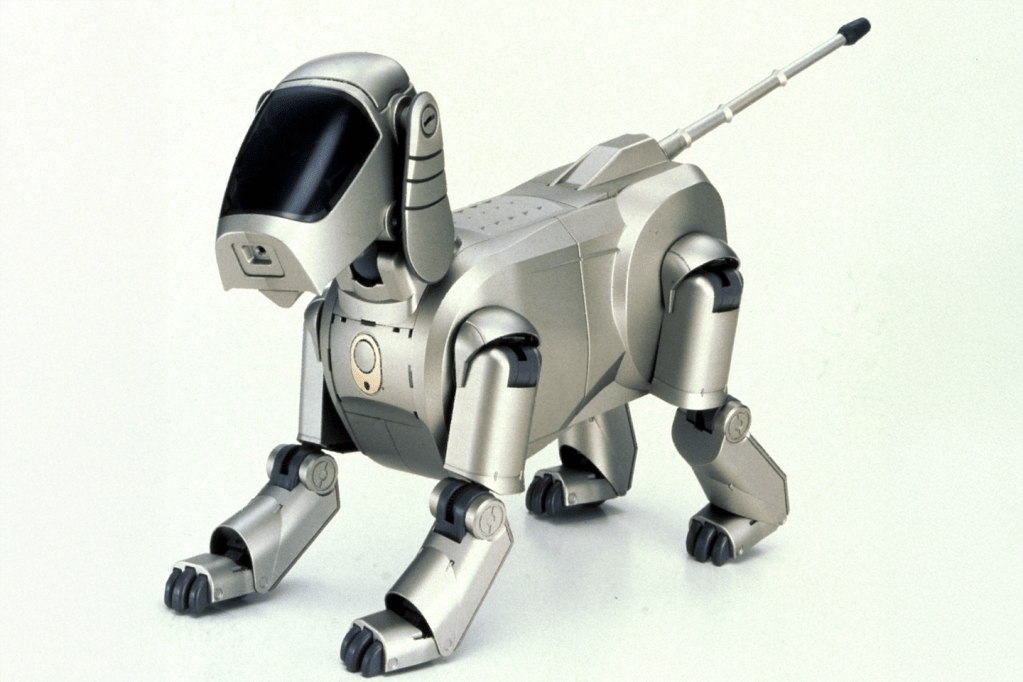
Since their creation, robotic pets have continued to evolve into increasingly sophisticated companions designed for entertainment, support, and emotional connection.
Although simple safety and survival is already a part of many designs, emotion in pets is what causes them to sit on your lap, get excited when you come home, or miss you when you leave. These behaviors are the primary reasons people want a pet in the first place, so their robot counterparts must mimic these desirable behaviors, while eliminating the undesirable traits of animals: bathroom accidents, whining, torn shoes, etc.
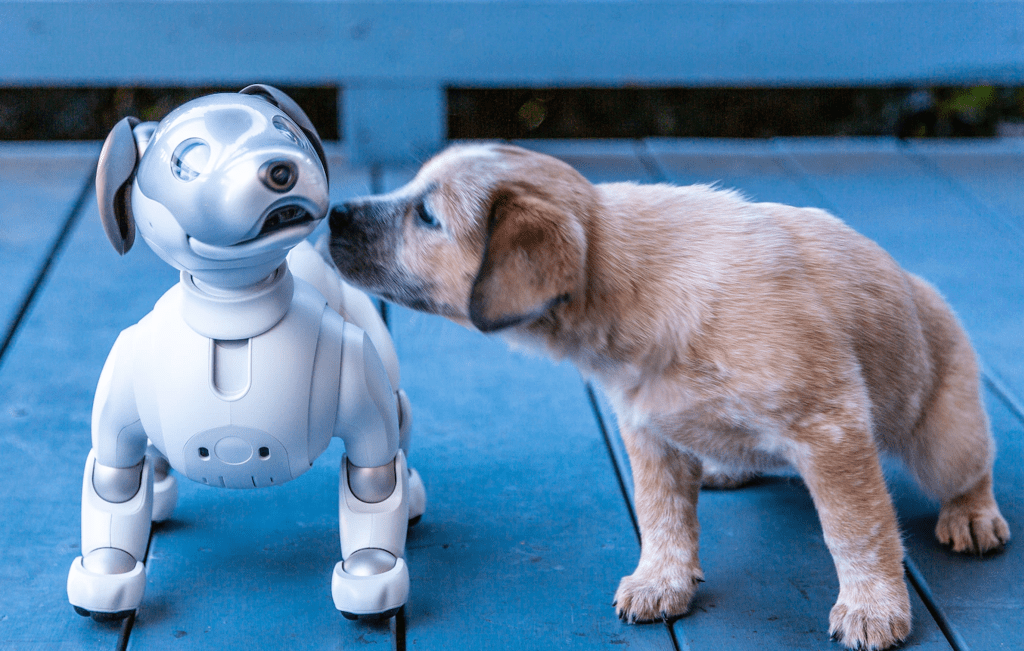
Sony continues to make the ‘AIBO Companion Robot,’ and it has come a long way since 1999. This robot now has the capability to perform various functions similar to a real dog, including responding to voice commands, learning new tricks, playing with toys, and seeking interaction like petting. It can independently navigate its environment before returning to its charging station when tired. Some even believe that their Aibo recognizes them and obeys specific commands.
Sony even sells special toys, water bowls, and accessories for their robots, further pushing this illusion and strengthening the impression that owners aren’t just maintaining a device, but genuinely caring for a companion. As of this moment, Aibo’s most recent 2025 update gave the robot the ability to follow you around, and pick things up other than their SONY-branded toys.
Don Norman also believes that form should follow function which is why these ever-evolving robot pets maintain the basic shape of the animal they mimic, swapping their fur for sleek white plastic.
Robots that serve human needs…. should probably look like living creatures, if only to tap into our visceral system, which is prewired to interpret human and animal body language and facial expression.
Author of Emotional Design, Don Norman.
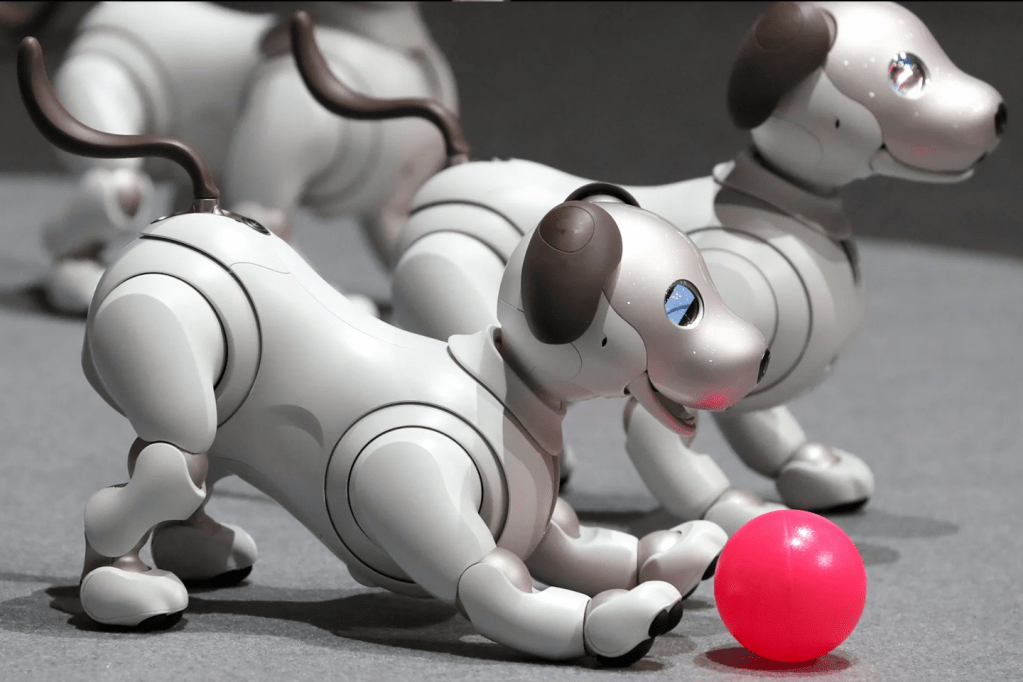
Today’s robots and AI systems can model emotion much more convincingly. They can detect stress in a person’s voice, respond based on their emotion, adjust movement, or simulate concern through behavior. Advances in Ai and technology have allowed robots to perform emotional reactions more fluidly than before. What has changed is the seamlessness with which they can imitate our emotions in order to make us feel comfortable and understood.
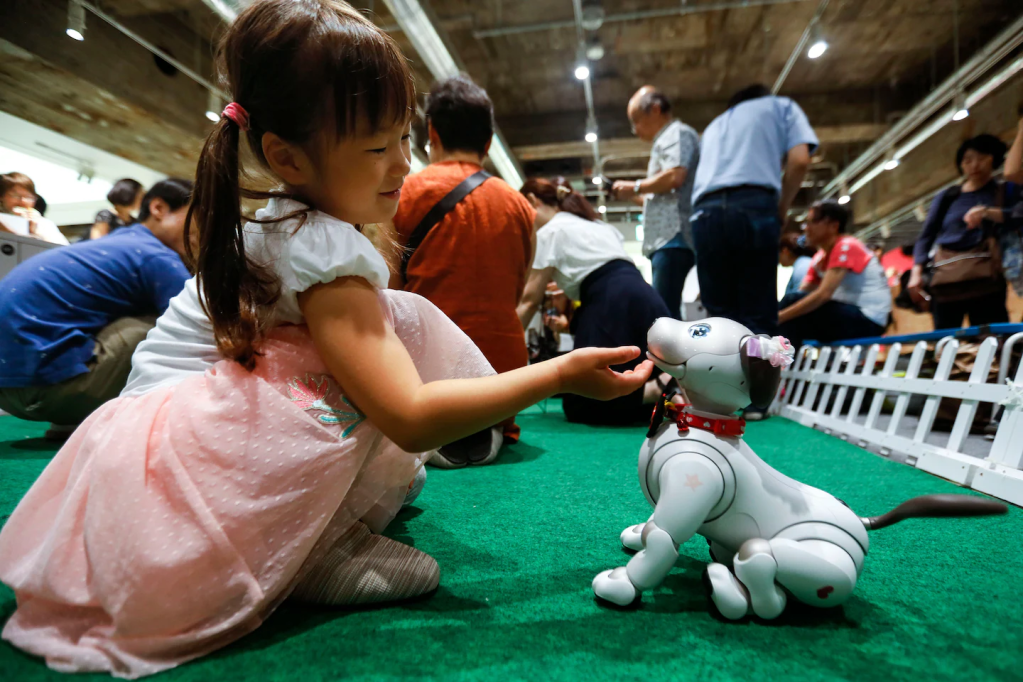
Machines can evoke real emotions in people, which can be leveraged for beneficial applications in society.
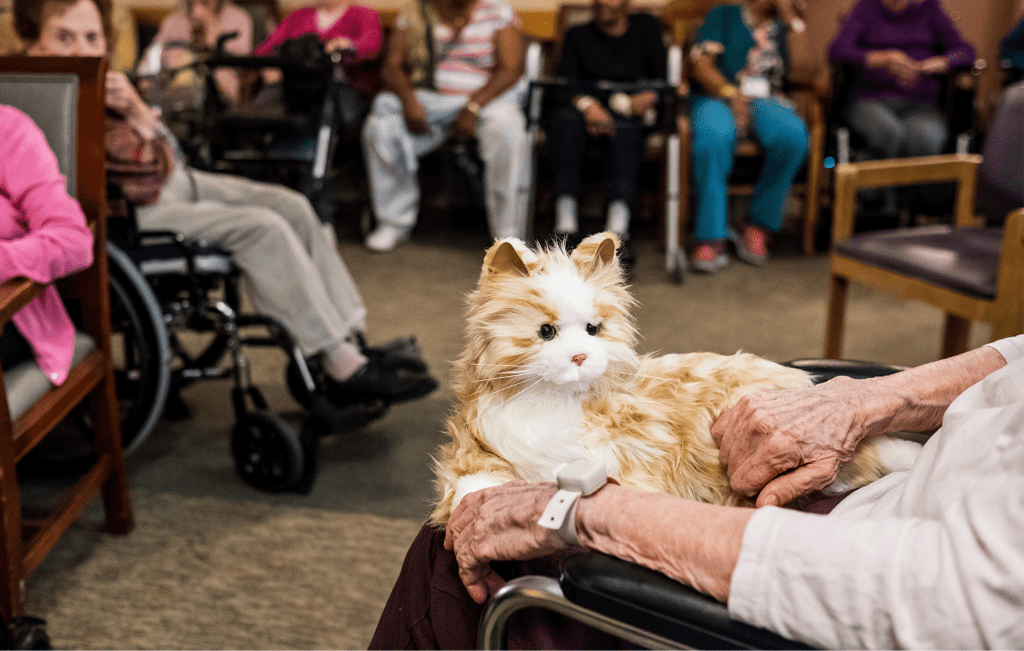
Robot dogs and cats, such as ones created by the company Joy for All, have begun to be used to combat loneliness in elderly patients. They are proven to be especially beneficial for individuals with Alzheimer’s disease and dementia, decreasing levels of stress and anxiety as well as the use of related medication. The controllability and predictability of these machines makes them the perfect comfort item for patients who need security and patience that animals don’t always provide.
They [patients] love them [robotic pets] like a real pet, and their families and caregivers have said they see a huge difference in their loved one’s mood.
Director of the New York State Office for the Aging, Greg Olsen.
The future of robotics is uncertain, and there are many different ethical and logistical obstacles to overcome. Asimov’s Four Laws of Robotics further makes the conversation more interesting, especially when looking at it in relation to pets and animals. Animals are supposed to be spontaneous, emotional creatures, however, robot pets must maintain this behavior facade while simultaneously following Asimov’s laws to obey orders and protect the well-being of humanity. I am curious to see how the role of robot pets shifts in the future and how this technology can benefit, or hinder, our progress.
I believe that for people who cannot safely or consistently care for living animals, whether due to physical, mental, or other limitations, these companions can offer comfort, engagement, and emotional support without risking safety.
If you are just using it as an excuse to have a dog that can’t use the bathroom, you are lame and don’t need a dog.
 Cami Rick