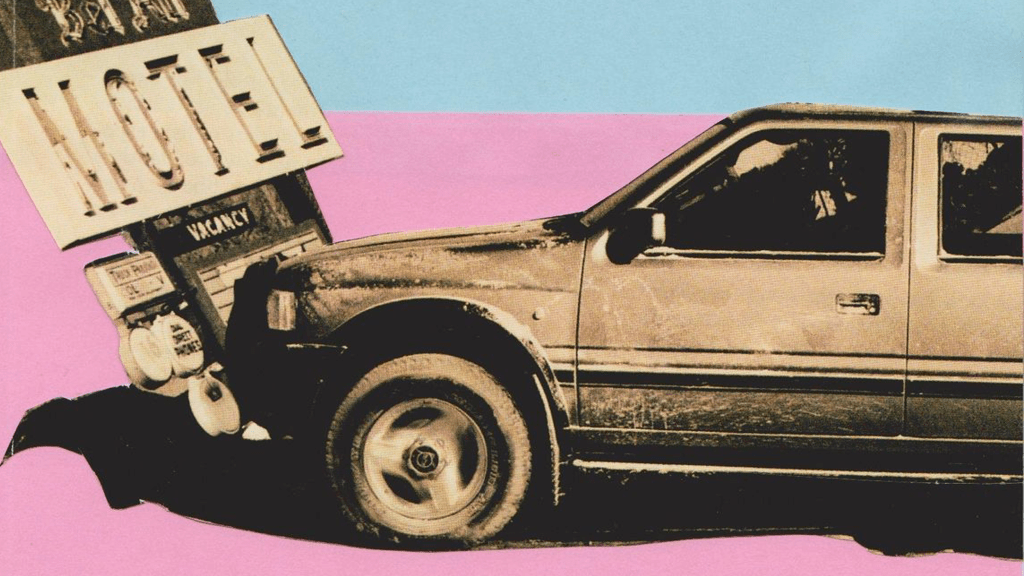
As machines become more capable… they will get entangled in the legal system, which will try to determine fault when accidents arise.
Author of Emotional Design, Don Norman.
Two decades later, Don Norman’s observation reads less like a prediction and more like a headline. Autonomous vehicles are now sharing real roads, with real people and creating consequences.
Waymo is an American autonomous driving company based in Mountain View, California. It originated in 2009 as Google’s self-driving car project and became an independent brand in 2016. The company develops fully autonomous ‘robotaxi’s that operate without human drivers.
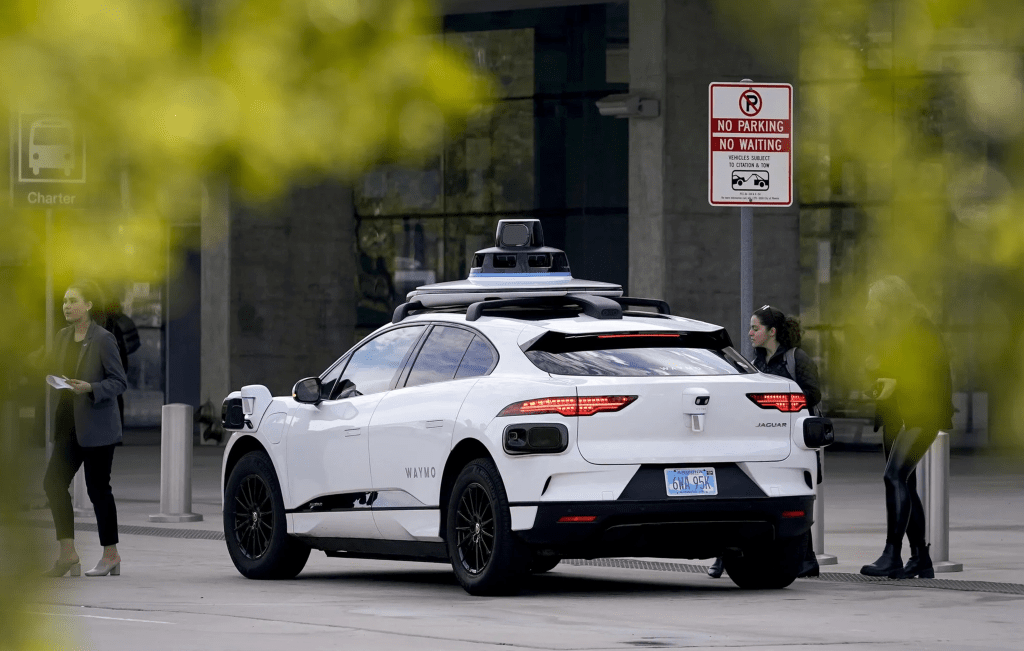
In 2020, Waymo launched the first commercial driverless ride-catching service available to the public in Phoenix, and has since expanded service to major cities including Los Angeles, San Francisco, and Austin.
The data to date indicates the Waymo Driver is already making roads safer in the places where we currently operate.
Waymo representative, Waymo.com.
Despite Waymo’s safety claims, countless videos on social media document strange, dangerous, or unpredictable behavior from the company’s self-driving taxis.
One passenger heading to the Phoenix airport found themselves locked in a car that drove in circles inside a parking lot before it eventually stopped. In another viral clip, Waymo passengers film as their car cuts into traffic, narrowly avoiding collision only thanks to the defensive reactions of nearby human drivers.
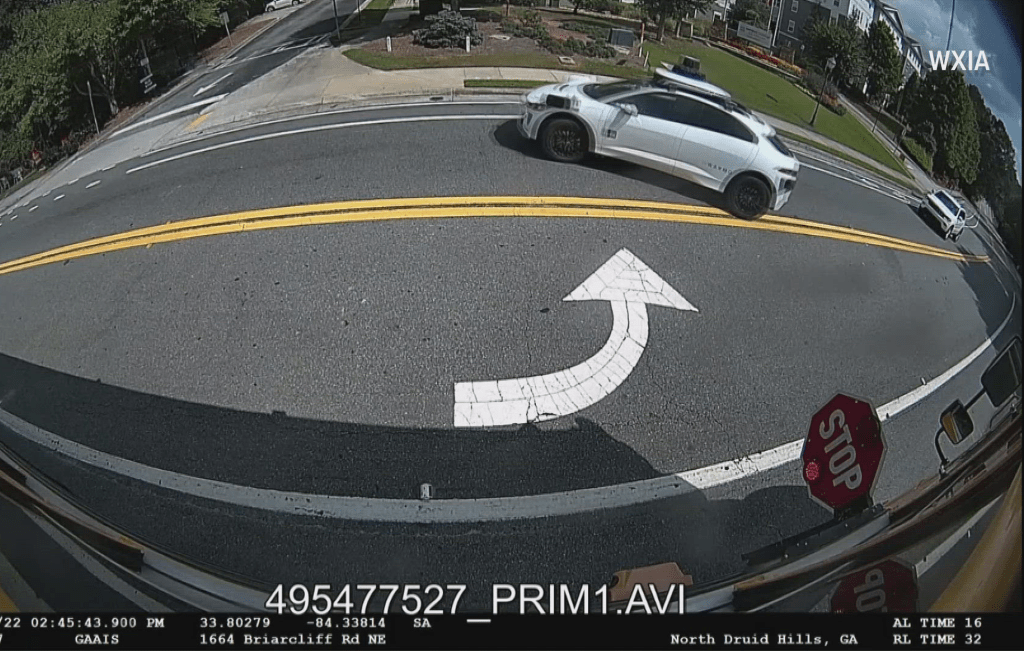
Most recently, the company released a voluntary software recall due to over a dozen instances of their robotaxis failing to stop for stopped school buses in Atlanta and Texas, a serious violation of traffic law and a critical safety concern.These incidents add to a growing list of moments where the company’s vehicles failed to interpret urgent situations, and these apparent glitches aren’t the only issues Waymo has faced in their programming.
Another video shows a Waymo automated taxi driving directly through the perimeter of a police standoff in downtown Los Angeles. The clip reinforced public fears that autonomous vehicles are not yet equipped to recognize or respond to emergency scenes, unexpected obstacles, or unstructured environments. What would occur if a Waymo missed the sirens of an ambulance or police car, like they misunderstood in this situation?
These vehicles are not programmed yet to handle unique circumstances, fail to perform for their users, and yet are still roaming major cities picking up passengers.
Everyday unexpected situations challenge the machine’s perception and decision-making. Their programming is not yet equipped to respond to circumstances as humans would. Despite the company’s efforts to to demonstrate safety and reliability, these incidents have put them under heavy scrutiny. No matter how advanced, Waymo’s autonomous vehicles still lack the intuition, contextual awareness, and snap judgment that human drivers use.
Waymo’s shortcomings extend beyond traffic confusion to cases involving real emotional harm. One of their vehicles in San Francisco ran over a beloved neighborhood cat, KitKat, which sparked media attention and demonstrations against Waymo. San Francisco Supervisor Jackie Fielder urged California lawmakers to allow residents to vote on whether autonomous cars can operate in their neighborhoods as a result.
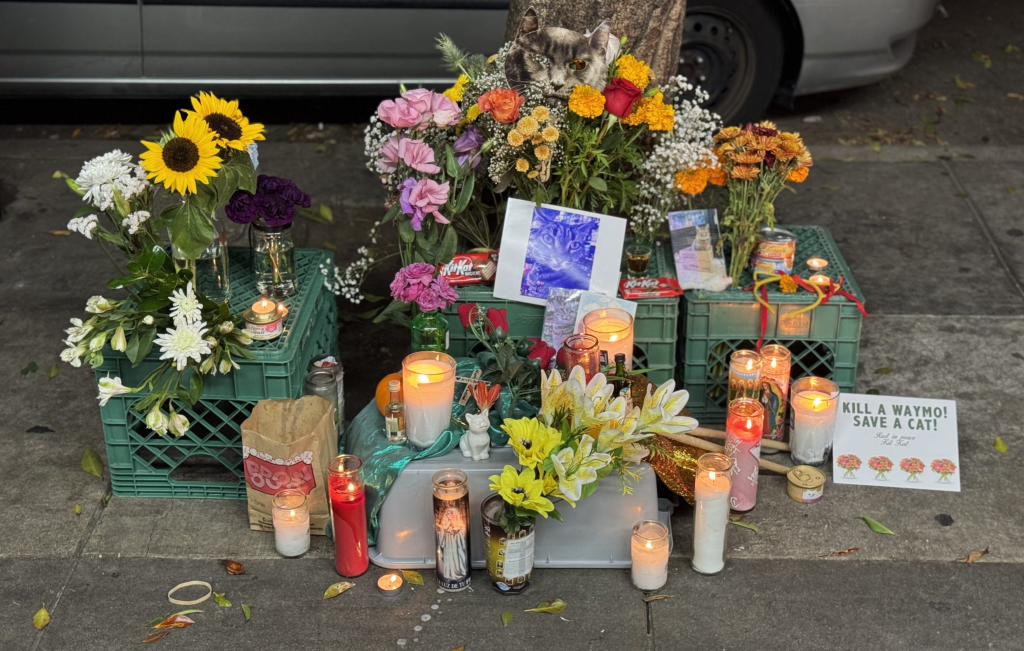
A human driver can be held accountable. Here, there is no one to hold accountable.
Member of the San Francisco Board of Supervisors, Jackie Fielder.
Countless other animals have been injured or killed as a result of these vehicles. According to the passenger, it’s not just the action, but the response and lack of accountability that made the situation feel so terrible.
I’m not sure a human driver would have avoided the dog either, though I do know that a human would have responded differently to a ‘bump’ followed by a car full of screaming people.
Reddit, Waymo passenger in pet accident.
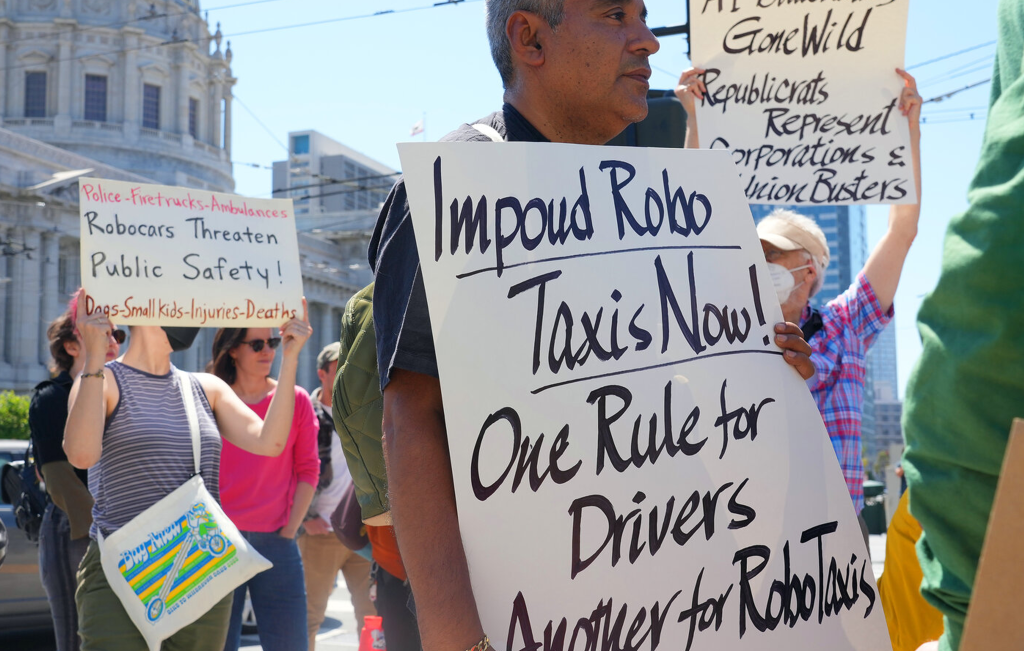
Community activists have protested the expansion of driverless car services in San Francisco,
Photo Credits | Jim Wilson, New York Times
This sentiment captures the unease many feel. When a machine causes harm, even unintentionally, accountability becomes confused. There is no driver to apologize and no one to directly face consequences.
The rise of autonomous vehicles brings another consequence Norman addresses directly: the displacement of human workers. The movement away from Uber, Lyft, taxis, and other human-run transportation jobs threatens the livelihoods of countless drivers who rely on that income.
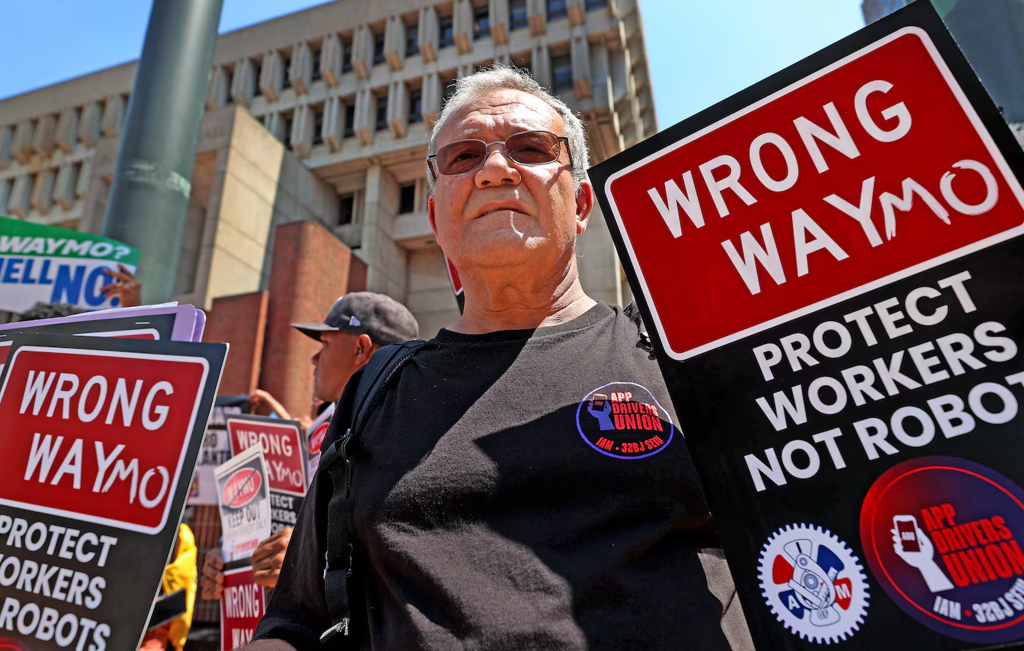
Norman acknowledges this reality as a significant social problem, yet he ultimately argues that the benefits of new waves of technology will outweigh these losses. I still believe the rapid shift raises urgent questions: Who supports the workers who lose their jobs? Is the human cost worth it?
I see the development of intelligent machines as both inevitable and beneficial.
Author of Emotional Design, Don Norman.
As autonomous systems become more capable, they become entangled in questions of legal responsibility and ethics. We must figure out how to respond to this.
People have also begun vandalizing Waymo’s in protest, a result of police increasingly relying on self-driving cars and their cameras for video evidence.This act further pushes the brand into the social media spotlight.
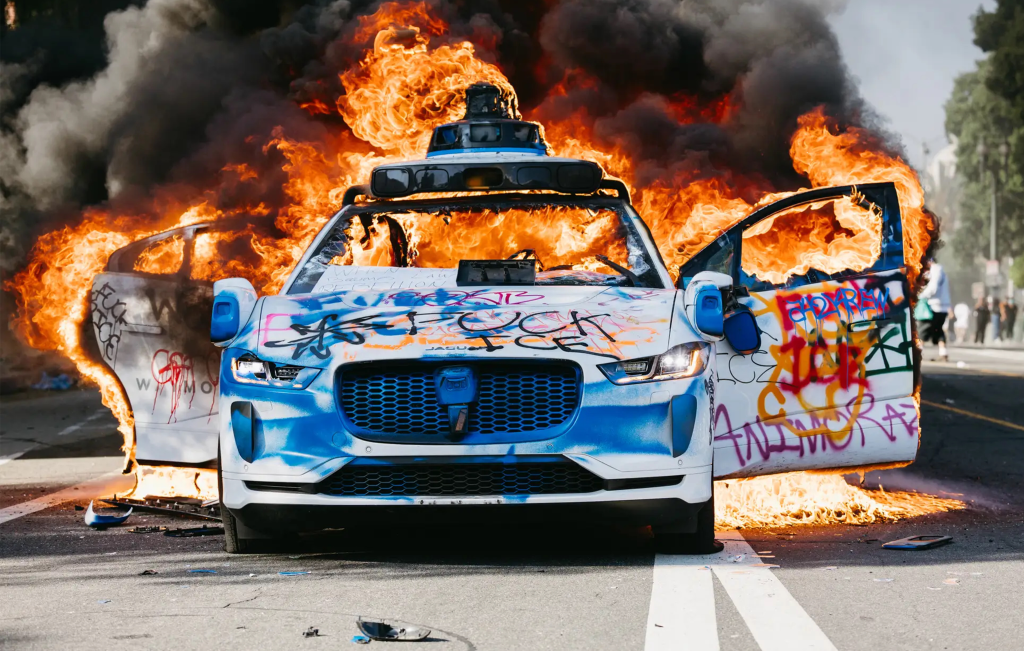
Don Norman hopes for the replacement of human drivers with robot cars in chapter 7 of Emotional Design, but I wonder what he would think of the current state of autonomous vehicles. I personally won’t be getting in a Waymo anytime soon.
We are in a new era.
Author of Emotional Design, Don Norman.
 Cami Rick